

Easy Ways to Say Please and Thank You in Dutch
TRYING TO FIGURE OUT HOW TO SAY PLEASE AND THANK YOU IN DUTCH? LET ME HELP !
I’ve spent more than a month in the Netherlands after many trips over the past few years. In fact, it’s one of my favorite countries to visit! I’ve learned to speak a few words of the native language (like the very important please and thank you in Dutch!) with the locals in the Amsterdam area, and if I can do it, you can too!
If you’re headed to the Netherlands and planning to spend some time there, it goes without saying that one of the best things you can do is prepare yourself to speak a few words- like please in Dutch (and thank you, too!).
Speaking the native language (or trying to) can go such a long way in helping you make friends, get around, and engage with locals in the area.
Stepping into a store in the Netherlands and being able to thank them in Dutch has earned me many a broad smile- and some interesting conversations, too!
Luckily, saying please in Dutch (and learning to say thank you in response) could not be easier! The word for please is literally my favorite word to speak in Dutch- it is simple but memorable enough that you can remember the phrasing in a pinch.
Here’s how to go about saying thank you in Dutch:
⭐ The Short Version: How to Say Please and Thank You in Dutch
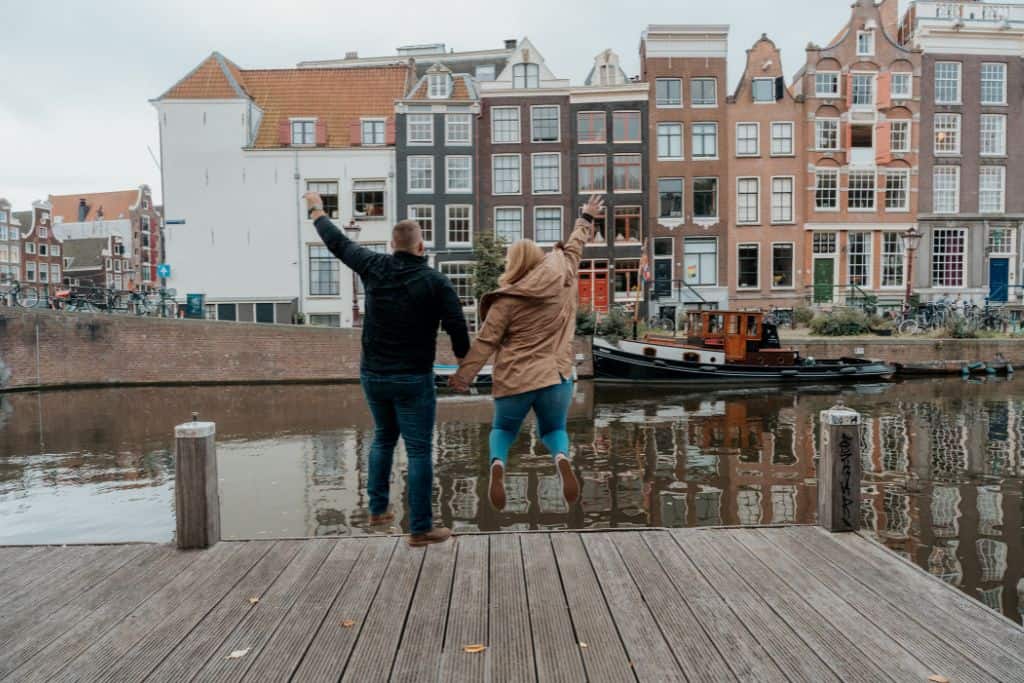
✅Please= alstublieft (ah-stu-blee-ft)
✅Thank You = dank je wel (dahnk-yuh-vell), dank je (dank yuh), or bedankt (beh-dahn-kt)
How to Say Please in Dutch
Speaking a language that you clearly don’t know well enough to conversate in can be intimidating- in the best of circumstances.
I know that the first time I tried to utter some of these words, I was so paranoid that a local would laugh at my mispronunciation or roll their eyes at my idiocy. But, trust me, they don’t. (The Dutch are literally some of the kindest people ever!).
Instead, tourists and visitors who attempt to use simple Dutch phrases with locals are, in my experience, treated with a special touch that feels so welcoming. So, even though English is widely spoken in the Netherlands, it can still pay off to try your hand at Dutch!

What is the Dutch Word For Please?
In the Dutch language, the most common word for please is “alstublieft.” This is essentially the closest you’ll get for an English equivalent of “please,” though it actually means something more akin to “if you please.”
Alstublieft is also the most polite, or formal, way to say please in Dutch. Alstublieft is used very liberally in the Netherlands, and you will hear it constantly as you’re moving throughout the country.
Informal Dutch Word For Please
As a whole, the Dutch people are not often overly formal. In fact, most Dutch locals speak in the informal language.
But, the opposite is true with saying please. Informally, please is “alsjeblieft.” However, you won’t really hear people utilizing this frequently.
In fact, when I was most recently in Amsterdam for a week, I didn’t hear even one person say please this way.
How to Pronounce Please In Dutch- Alstublieft (EASILY!)
As a rule…pretty much nothing in Dutch looks like it’s pronounced- lol. Even though Dutch is technically a Germanic language, it can still be difficult to ascertain pronunciations and meanings.
🚨 IMPORTANT: The j in Dutch is pronounced more like a “y” sound. And the w is pronounced as a “v” sound!
With the above in mind, the Dutch word for please, “alstublieft,” is pronounced “ah-stu-blee-ft.” There’s an audio below so that you can hear it for yourself!

Other Uses For Alstublieft
The word alstublieft, although it means please, can also be used in some other scenarios. And they can be somewhat confusing.
For instance, you might hear a cashier say “Alstublieft” when they hand you back change or a receipt. In this case, alstublieft is used as something more like “you’re welcome,” or “here you are.”
✅ Note: This is ONLY the case if you’re being given something. Alstublieft does not mean you’re welcome if you’re not actively being given something.
⭐ For Example: if you’re ordering a coffee, the waitress might hand it to you and say “alstublieft!” But, if you’re having a conversation with someone and you go to walk away, you would not say alstublieft as there is no exchange in items.
Each time I’m in the Netherlands, and especially when I’m in Amsterdam, I hear alstublieft used both ways, so it’s important to know that it is a somewhat interchangeable word.
How to Say Thank You in Dutch
If you’re going to say please in Dutch, it’s pretty likely that you’ll need to know how to say thank you in Dutch, too. They tend to go hand in hand during conversation.
Thankfully, saying thank you in the Dutch language is relatively easy (certainly easier than pronouncing please-ha!).
Here are a few easy ways to say thank you while you’re in the Netherlands:
Informal Way to Say Thank You in Dutch (Dank je Wel)
The informal way to say thank you in Dutch is by using the term “dank je wel.” This is the most frequently used way to utter thanks.
REMEMBER: The j in Dutch is pronounced more like a “y” sound. And the w is pronounced as a “v” sound!
Therefore, to correctly pronounce dank je wel, you would say “dahnk-yuh-vell.”
Here is an audio of thank you in Dutch- dank je wel- to help!
If you’re looking to be extra casual, you can also eliminate the “wel” completely and just say “dank je!”

Formal Way to Say Thank You in Dutch (Dank u wel)
The formal way to say thank you in Dutch is “dank u wel.” However, you won’t hear this used nearly as often as the informal way.
Mostly, dank u wel is only used when talking to someone who is elderly or is in a position of authority. The main change is the “u” in the middle of the pronunciation.
Here’s how you would say it: “dahnk-u-vell.”
One Other Way to Say Thank You in Dutch
There are many other phrases that mean thank you in Dutch. Just like in the English language, you can say “Thank you very much,” or something along the same lines.
Really, the only additional way that is common of saying thank you is Bedankt. It just means “thanks.”
✅ Bedankt is pronounced (beh-dahn-kt)
How to Say Please in Dutch FAQ
What do Dutch say when you sneeze?
The Dutch say “Gezondheid!”, which means “Health!”—similar to “Bless you” in English.
What is “sorry” in Dutch?
Sorry” in Dutch is actually “sorry”—it’s borrowed from English and commonly used. A more formal way to apologize is “Het spijt me.”
Are the Dutch friendly?
Yes, but they are also direct. They are generally welcoming and helpful, though their straightforwardness can sometimes come across as blunt.
What is polite in the Netherlands?
Saying “dank je” (thank you), “alstublieft” (please, formal), and “pardon” (excuse me) is polite. Being punctual, respecting personal space, and speaking in a clear, honest way is also valued. People also commonly shake hands when greeting someone, especially in formal or business settings.
Wrapping Up: How to Say Please in Dutch
There you have it! Your crash course on how to utter a nice Dutch please and thank you!
The truth is: trying a few key words in Dutch during your time in the Netherland is much easier than it seems. Although I felt a little apprehensive the first time I tried, it quickly became second nature.
And, as I mentioned above, I’ve found that many locals genuinely appreciate it when you make an attempt to speak their language- even if it’s just to say thank you! They speak quite a bit of English in the Netherlands, so they’ll understand you either way…but give it a try!
Choose your favorite way to say please in Dutch, and try it out!

If you’re headed to Amsterdam soon, here are some more helpful tips:
✅ My favorite Amsterdam itineraries for 4 days or one day in Amsterdam!
✅ All the Canal Cruises I recommend in Amsterdam- including private tours!
✅ An Amsterdam Bucket List to complete!
✅ Everything you need to know for visiting the Anne Frank House
✅ Top Weekend Trips from Amsterdam
✅ Review on my #1 Place to stay in Amsterdam
✅ If you’re biking around the city, here’s what you need to know!
✅ Wondering if you can speak English in Amsterdam? Or do you need to greet in Dutch?


